
Description
Ethiopia’s luxury gold plated jewelry sets are more than just accessories—they are living expressions of the country’s rich history, diverse cultures, and deep spiritual traditions. For centuries, these handcrafted pieces have been passed down through generations, carrying stories of love, faith, and identity. Whether worn at a traditional wedding, a religious festival, or a cultural celebration, each set tells a unique tale of Ethiopia’s heritage. In this article, we explore the cultural roots, design elements, craftsmanship, and significance of these iconic jewelry sets.
### 1. The Cultural Roots of Ethiopian Traditional Jewelry
Ethiopian jewelry-making traces its origins to the Aksumite Empire, one of Africa’s most powerful ancient civilizations that flourished from the 1st to the 7th centuries CE. Archaeological excavations in Aksum have uncovered gold and silver jewelry adorned with crosses, geometric patterns, and animal motifs, revealing the empire’s advanced metalworking skills. When Ethiopia became the first African country to adopt Christianity as its state religion in the 4th century CE, religious symbols—most notably the cross—became central to jewelry design.
Beyond the Aksumite era, Ethiopia’s diverse ethnic groups have contributed to the evolution of traditional jewelry. The Amhara people, for example, are known for their intricate cross necklaces and colorful glass-beaded pieces, while the Oromo community favors bold geometric patterns that reflect their connection to the land. The Tigray people, with their rich agricultural heritage, often incorporate plant motifs like olive branches and wheat into their jewelry. These cultural variations make Ethiopian jewelry a tapestry of the country’s ethnic diversity.
### 2. What Defines the Luxury Gold Plated Jewelry Set?
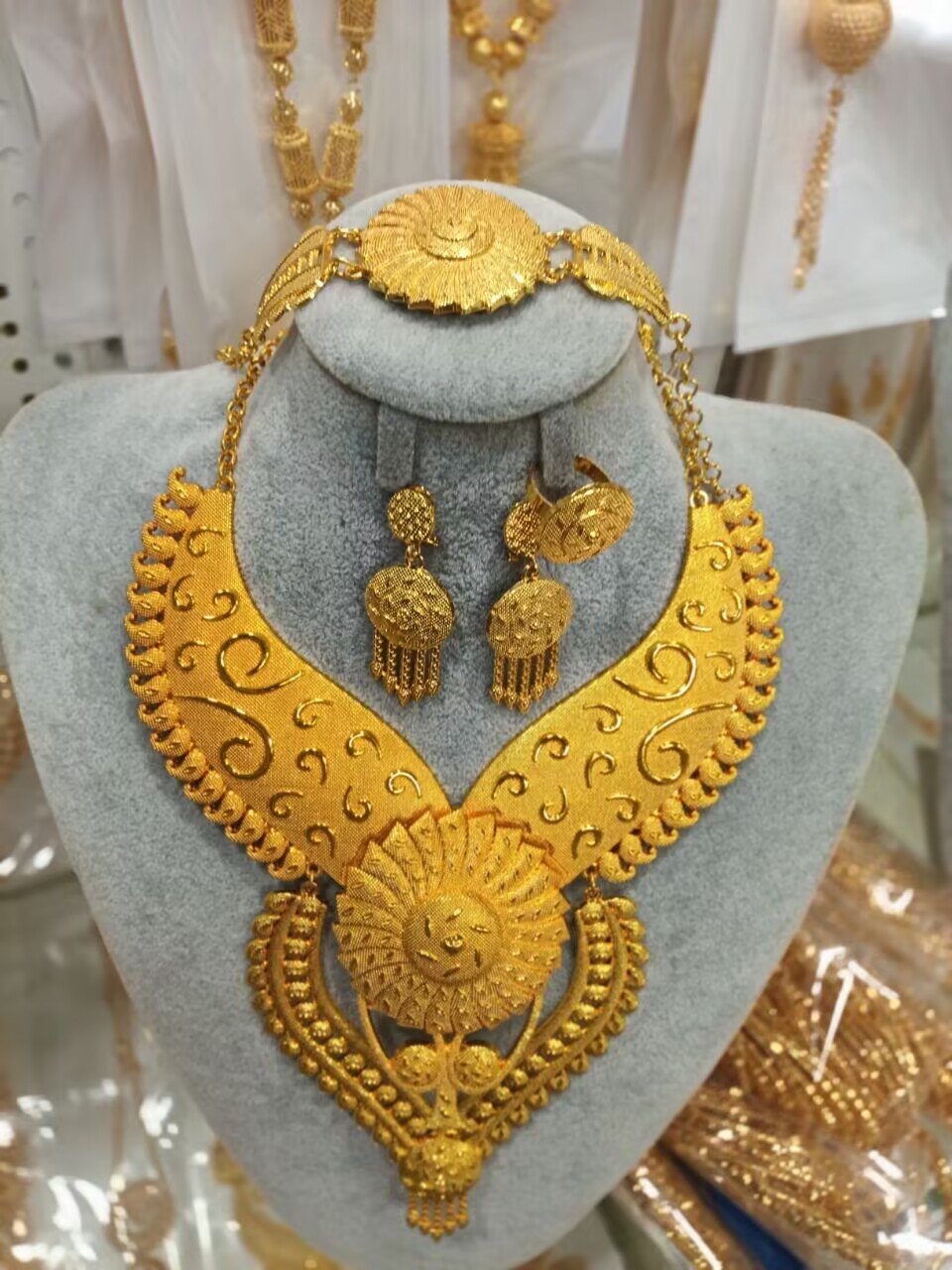
A typical Ethiopian luxury gold plated jewelry set includes four core pieces: a necklace, earrings, a ring, and a bracelet. Unlike mass-produced accessories, each piece is handcrafted using traditional techniques that prioritize both beauty and durability.
The base metal for most sets is copper, chosen for its affordability, malleability, and ability to hold gold plating well. Some artisans also use silver as a base, especially for more premium sets. The gold plating process, while sometimes modernized for safety, retains traditional principles: in ancient times, artisans used gold leaf and heat to adhere the gold to the base metal, while modern methods often use electroplating to create a long-lasting finish.
Design elements of the set often blend religious symbols, cultural motifs, and natural inspiration. Common symbols include the Ethiopian Orthodox cross (known as the “Debre Berhan” cross, which features a central cross with smaller crosses at the ends), geometric shapes like triangles and circles (representing unity and eternity), and animal motifs like lions (a symbol of Ethiopia’s national pride). Some sets also incorporate semi-precious stones like carnelian or turquoise, or colorful glass beads, adding a pop of color to the gold plating.
### 3. The Significance of Each Piece in the Set
Each piece in the Ethiopian gold plated jewelry set serves a unique purpose, reflecting cultural values and traditions:
– **Necklace**: Ethiopian necklaces are often long and layered, with the central cross as the focal point. For special occasions like weddings, brides may wear multiple necklaces of varying lengths, symbolizing the depth of their love and commitment. Some necklaces also feature small bells or charms, which are believed to ward off evil spirits.
– **Earrings**: Traditional Ethiopian earrings are typically large and bold, with designs ranging from circular hoops to teardrop shapes. In many communities, wearing large earrings is a sign of a woman’s beauty and social status. For example, Amhara women often wear hoop earrings adorned with glass beads, while Tigray women favor earrings with cross motifs.
– **Ring**: Ethiopian rings are often engraved with cultural symbols or family crests, making them meaningful heirlooms. Engagement rings, in particular, may feature a cross or a heart-shaped design, symbolizing faith and love. Some rings also have a small compartment that holds a piece of holy scripture, reflecting the country’s strong religious beliefs.
– **Bracelet**: Bracelets in the set are usually made of gold-plated metal chains or leather straps adorned with gold beads. They are often given as gifts to symbolize friendship, protection, or good fortune. In some tribes, bracelets are worn by both men and women, with different designs indicating age or marital status.
### 4. Craftsmanship: How Ethiopian Artisans Create These Pieces
The creation of an Ethiopian gold plated jewelry set is a labor-intensive process that can take weeks or even months, depending on the complexity of the design. Here are the key steps:
1. **Design and Planning**: Artisans start by sketching the design, incorporating cultural symbols and the customer’s preferences. They may also refer to traditional patterns passed down through generations.
2. **Metal Preparation**: The base metal (copper or silver) is melted and poured into molds, or forged by hand using a hammer and anvil to create the desired shape. Forged pieces are often more durable and have a unique, handcrafted look.
3. **Plating**: Once the base metal is shaped, it is cleaned and polished to remove any impurities. The gold plating is then applied—either through traditional fire gilding (using gold leaf and heat) or modern electroplating (using electricity to bond gold to the base metal). Electroplating is now more common due to its safety and durability.
4. **Engraving and Decoration**: Artisans use small hand tools to engrave patterns, symbols, or inscriptions onto the jewelry. Some pieces are also adorned with glass beads, semi-precious stones, or enamel, adding color and detail.
5. **Finishing**: The final step involves polishing the jewelry to a high shine, ensuring that the gold plating is even and the design is clear. Artisans may also add a protective coating to prevent tarnishing.
### 5. Occasions for Wearing the Luxury Gold Plated Set
Ethiopian gold plated jewelry sets are not just everyday accessories—they are reserved for special occasions that hold cultural or spiritual significance:
– **Weddings and Engagements**: These sets are a staple of Ethiopian wedding ceremonies. Brides often receive a set as a gift from their family, and the jewelry is passed down to future generations. The cross in the set symbolizes the couple’s faith and the blessing of their marriage.
– **Religious Festivals**: Ethiopia’s main religious festivals, such as Genna (Ethiopian Christmas) and Tsomu (Lent), are occasions for wearing traditional jewelry. Wearing cross necklaces and earrings is a way to express devotion to the Orthodox faith.
– **Cultural Celebrations**: Tribal festivals, national holidays, and cultural events are also times to showcase traditional jewelry. Different ethnic groups wear their unique designs, celebrating their heritage and identity.
– **Special Events**: Some modern Ethiopians also wear these sets to formal events like galas or business meetings, blending tradition with modern style.
### 6. Preserving Tradition in Modern Times
As the world becomes more globalized, Ethiopian artisans are working hard to preserve the traditional art of jewelry-making while adapting to modern tastes:
– **Young Artisans**: Many young Ethiopians are learning traditional jewelry-making from their elders, ensuring that the craft is passed down to the next generation. Some are also incorporating modern elements like smaller, more delicate designs that are suitable for everyday wear.
– **International Recognition**: Ethiopian gold plated jewelry sets are gaining popularity in global markets, including Europe, North America, and Asia. They are sold in handcraft fairs, online marketplaces, and high-end boutiques, introducing the world to Ethiopia’s cultural heritage.
– **Cultural Protection**: The Ethiopian government and non-governmental organizations are supporting traditional artisans by providing training, funding, and access to markets. This helps to ensure that the craft remains viable and that artisans can earn a fair income for their work.
Ethiopia’s luxury gold plated jewelry sets are a testament to the country’s rich cultural heritage and the skill of its artisans. Each piece is more than just an accessory—it is a story of history, faith, and identity. Whether worn at a wedding, a religious festival, or a modern event, these sets continue to connect Ethiopians to their roots while captivating people around the world. As the craft evolves, it remains a vital part of Ethiopia’s cultural identity, preserving traditions for future generations.
Reviews
There are no reviews yet.