

Description
### Introduction
Ethiopian bridal jewelry is far more than a finishing touch for wedding attire—it’s a tangible link to centuries of cultural heritage, family lineage, and spiritual beliefs. Among the most revered pieces are classic gold color jewelry sets, which combine intricate craftsmanship with deep symbolic meaning. For Ethiopian women, these sets are not just accessories; they are a rite of passage, a dowry staple, and a way to carry their ancestors’ stories into their married lives.
### The Historical Roots of Ethiopian Gold Bridal Jewelry
The story of Ethiopian gold jewelry begins with the Axumite Empire (100 BCE–940 CE), one of the ancient world’s most powerful civilizations. Axum, in present-day northern Ethiopia, was a global hub of gold trade, with its gold coins (called *solidus*) recognized across the Mediterranean and Middle East. Archaeological finds—including necklaces, earrings, and bracelets from royal tombs—reveal gold was reserved for the elite, symbolizing power and divine favor.
By the Zagwe Dynasty (12th–13th centuries), gold jewelry became more accessible to nobility, with designs blending religious art (crosses, biblical motifs) and traditional patterns. Ethiopia’s deep Orthodox Christian roots shaped these pieces, as crosses and holy symbols became common pendants. Over centuries, these traditions evolved, but gold’s revered status remained. Today, classic gold color sets are a cornerstone of Ethiopian bridal culture, passed down through generations.
### Key Features of the Classic Gold Color Bridal Set
The set centers on two iconic pieces: the necklace and earrings, each with distinct cultural and aesthetic traits.
#### The Layered *Shafele* Necklace
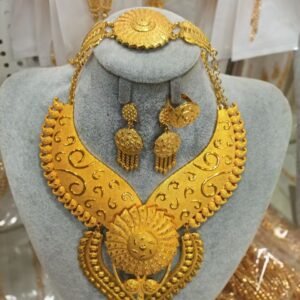
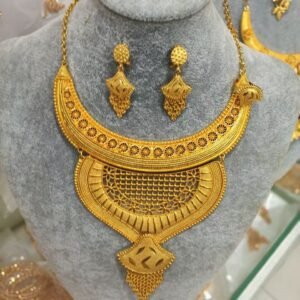
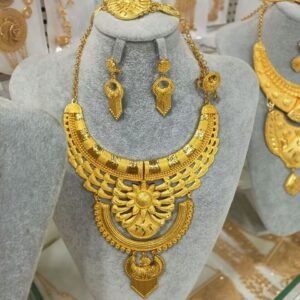
The necklace, known as *shafele* in Amharic, is a layered design with multiple strands of gold beads or chains. Intricate pendants adorn the strands, including crosses (a nod to Orthodox heritage), geometric shapes (representing unity), and small charms for fertility or prosperity. The “gold color” here refers to the warm, rich yellow hue traditional in Ethiopian jewelry—achieved with 18k or 22k gold alloys, balancing durability and luster.
#### The Bold *Tegada* Earrings
Complementing the necklace are large, circular *tegada* earrings. These frame the face with intricate filigree work or granulation (tiny fused gold beads). Some feature small drops or charms for movement, reflecting Ethiopia’s appreciation for opulence. Unlike minimalist modern styles, *tegada* earrings are bold and eye-catching, designed to honor the bride’s status.
### Cultural Significance Beyond Beauty
Ethiopian bridal jewelry carries meaning far beyond adornment:
#### Dowry and Lineage
Jewelry is a core part of the *kidan* (dowry), passed from mother to daughter. This tradition preserves family heritage—each piece carries blessings and stories from previous generations, ensuring the bride’s roots stay with her in marriage.
#### Spiritual Protection
Many Ethiopians believe gold wards off the *evil eye* (a common belief in East Africa). The metal’s luster and intricate designs are thought to repel negative energy, keeping the bride safe in her new life.
#### Public Declaration of Marriage
During the wedding ceremony, the set is worn with pride, signaling to the community that the bride enters marriage with honor and respect. It’s a visible symbol of her commitment and new role.
### Traditional Craftsmanship Behind the Set
Every classic gold set is handmade by skilled Ethiopian artisans, who learn their craft from family members. Key techniques include:
– **Filigree**: Twisting thin gold wires into delicate patterns (a practice dating to Axumite times).
– **Granulation**: Fusing tiny gold beads to surfaces for textured designs.
– **Repoussé**: Hammering gold from the back to create raised motifs.
Regional styles vary: Gondar artisans use detailed religious motifs, while Harar’s multicultural heritage inspires bold geometric patterns. Materials focus on gold alloys (mixed with copper or silver for durability) and occasional semi-precious stones like amber or coral.
### Modern Adaptations of the Classic Set
While traditional sets remain the wedding norm, modern brides add personal touches: custom pendants with initials or wedding dates, or pairing the set with contemporary clothing for pre-wedding events.
Ethiopian gold jewelry has also gained global recognition—designers like Stella Jean (with Ethiopian roots) incorporate traditional motifs into international collections. Beyond weddings, women wear pieces for cultural events, religious ceremonies, or daily life, keeping the heritage alive.
### Caring for Your Ethiopian Gold Color Jewelry Set
To preserve the set’s beauty:
– **Cleaning**: Use mild soap and warm water, gently scrubbing intricate areas with a soft toothbrush. Dry with a soft cloth.
– **Storage**: Keep in a dry, cool place, away from sunlight. Store pieces separately to avoid scratches (use cloth pouches or compartmentalized boxes).
– **Avoid Harsh Chemicals**: Remove before swimming, showering, or using perfumes/hairspray—these damage the gold alloy and dull the color.
### Conclusion
Ethiopia’s classic gold color jewelry sets are more than beautiful accessories—they are living pieces of history. They connect brides to their ancestors, symbolize love and protection, and showcase the skill of generations of artisans. Whether worn on a wedding day or for a cultural celebration, these sets carry stories that transcend time, making them a cherished part of Ethiopian identity.
Reviews
There are no reviews yet.