
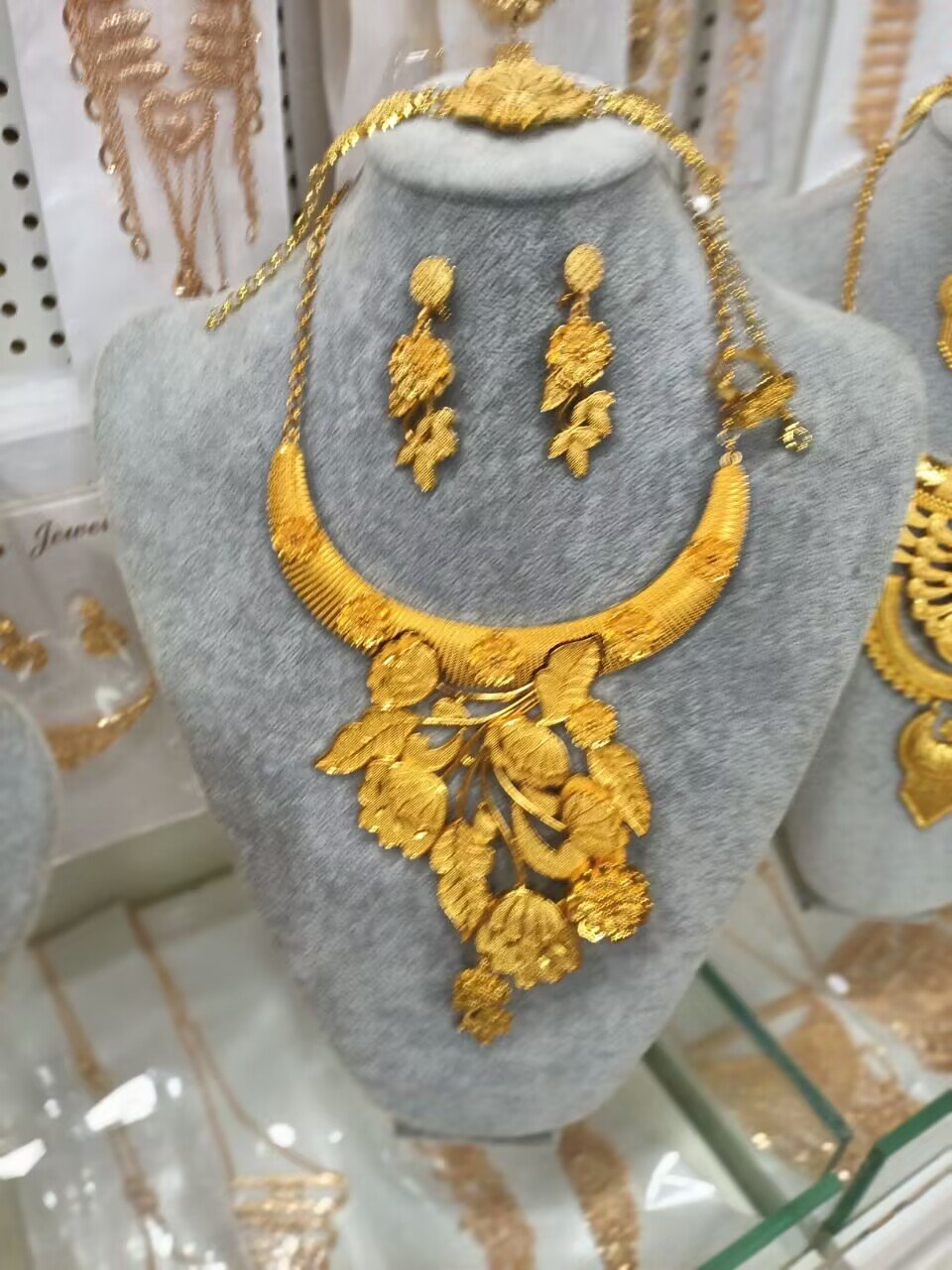
Description
### Historical Roots of Mali’s Gold Jewelry Heritage
Mali’s gold jewelry legacy stretches back to the 13th-century Mali Empire, once the world’s largest gold producer. Regions like Bambuk and Wangara yielded vast gold reserves, making the empire a global trade hub. Mansa Musa, the 14th-century ruler, famously carried tons of gold on his pilgrimage to Mecca, introducing the world to Mali’s golden wealth. This prosperity translated into intricate jewelry, where gold symbolized not just prosperity but spiritual purity.
Traditional Malian jewelry incorporated tribe-specific motifs: Bambara people used spirals to represent life’s cycle, while Dogon artisans etched geometric shapes honoring celestial bodies. These symbols weren’t decorative—they carried cultural identity passed down through generations. Over time, gold plating techniques made classic designs accessible to more families, preserving authenticity without the cost of pure gold.
### Design Philosophy Behind the Classic Gold Plated Bridal Set
The Mali Classic Gold Plated Bridal Set balances timeless tradition and modern wearability. Its design draws from centuries-old Malian bridal customs, with subtle tweaks for versatility:
– **Cultural Motifs**: Triangles and spirals (echoing Bambara and Dogon traditions) symbolize unity and eternity—perfect for weddings.
– **Layered Gold Plating**: A thick 18k gold layer over durable brass/copper mimics pure gold’s warm sheen.
– **Coordinated Pieces**: The 16–18-inch necklace (with extender) pairs with 1–2-inch drop earrings (lightweight for all-day wear), an adjustable bracelet, and standard-size band ring. The set’s uniformity complements Malian bridal attire, from vibrant wax-print dresses to elegant aso oke fabrics.
Minimalism keeps the focus on cultural symbols, making it suitable for kété ceremonies, religious weddings, and post-wedding celebrations.
### Craftsmanship: Handmade Techniques That Define Mali’s Jewelry
Every piece in the set is handcrafted by Malian artisans, preserving generational skills:
1. **Base Metal Prep**: Brass or copper is melted, cast, and hand-shaped into chains, posts, links, and bands.
2. **Motif Etching**: Intricate patterns are etched with chisels—steady hands and training ensure precision (e.g., spiral pendants catch light to highlight plating).
3. **Gold Plating**: Electroplating applies an even 18k gold layer; some artisans use traditional fire-gilding (gold leaf + heat) for artisanal charm.
4. **Polishing**: Soft cloths bring out luster, with each piece inspected for imperfections.
No two sets are identical—small variations add unique charm, cherished by brides who value one-of-a-kind pieces.
### Cultural Significance in Malian Bridal Traditions
In Mali, bridal jewelry is more than adornment—it’s a symbol of love, heritage, and commitment:
– **Necklace**: Represents the bond between husband and wife; the central pendant signifies the bride’s heart and family role.
– **Earrings**: Guard the bride’s ears, ensuring she listens to wise counsel (elders, family, spouse). Lightweight design suits long ceremonies.
– **Bracelet**: Placed on the wrist during the kété (engagement) ceremony, symbolizing proposal acceptance and shared promises.
– **Ring**: A band with subtle motifs represents eternal love, exchanged alongside traditional gifts (cloth, livestock) in some tribes.
The set is part of the bride’s dowry (often a groom’s family gift) and becomes a family heirloom passed to future generations.
### Durability and Care for Gold Plated Sets
While not pure gold, the set lasts with proper care:
– **Avoid Water/Chemicals**: Remove before swimming, showering, or using cleaners (chlorine/soaps damage plating).
– **Store Properly**: Keep in a dry, airtight velvet pouch to prevent tarnishing; avoid contact with other jewelry.
– **Clean Gently**: Wipe with a soft dry cloth after use; for deep cleaning, use mild dish soap + warm water, then pat dry. Never use abrasives or pure gold cleaners.
– **Replate When Needed**: Thin plating (e.g., ring bands) can be refreshed by local jewelers, extending lifespan for years.
### How This Set Fits Modern Malian Weddings
Mali’s wedding traditions blend ancient customs with modern influences, and the set adapts seamlessly:
– **Traditional Weddings**: Matches opulent attire (boubou, kente cloth) and pairs with beaded bracelets/headpieces.
– **Fusion Weddings**: Complements white dresses + Malian headwraps, thanks to neutral gold and simple design.
– **Affordability**: Plating makes it accessible, allowing couples to invest in cultural authenticity without overspending.
Brides can wear it beyond the wedding—for anniversaries, gatherings, or daily use—making it a practical, cherished investment.
Mali’s gold jewelry heritage is a testament to its history and culture. The Mali Classic Gold Plated Bridal Set is more than adornment—it’s a bridge between past and present, a symbol of love, and a celebration of Malian identity. For brides, it’s a piece of their story, cherished for generations.
Reviews
There are no reviews yet.