

Description
# Introduction to Angola’s Traditional Bridal Gold-Toned Jewelry Set
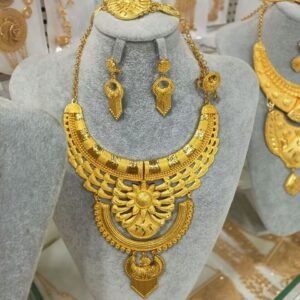
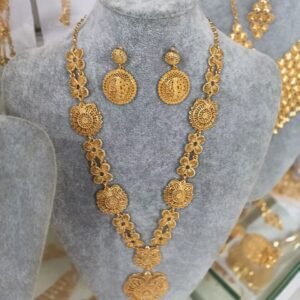
On an Angolan wedding day, the bride’s glow isn’t just from excitement—it’s often amplified by a set of gold-toned jewelry that weaves together centuries of cultural heritage, craftsmanship, and symbolic meaning. The Angola Exquisite Gold Color Jewelry Set—comprising a statement necklace, drop earrings, and a link bracelet—isn’t merely an adornment. It’s a bridge between the bride’s ancestral roots and her future, a tangible expression of love, community, and identity that resonates across the country’s diverse ethnic groups.
For many Angolan women, this set isn’t just something to wear on their wedding day; it’s a heirloom in the making, passed down through generations or crafted with care to honor family traditions. Whether you’re exploring Angolan culture or planning a wedding rooted in local customs, understanding the story behind this jewelry set reveals the depth of its significance beyond its shimmering appearance.
## Cultural Roots: Tying Jewelry to Angola’s Ethnic Heritage
Angola’s bridal jewelry traditions are shaped by its rich tapestry of ethnic groups—including the Mbundu (the largest group), Ovimbundu, Bakongo, and Ngangela. Each group brings unique motifs, techniques, and symbolic meanings to the pieces, but gold (or gold-toned metals) remains a universal thread.
In Mbundu culture, for example, gold has long been associated with royalty and purity. Brides historically wore layered gold necklaces to signify their family’s status and the respect owed to their new spouse. The Ovimbundu, meanwhile, often incorporate geometric patterns into their jewelry—interlocking triangles that represent community bonds and spirals that symbolize life’s journey. The Angola Exquisite Set draws from these shared traditions, blending classic motifs with modern wearability to appeal to brides across the country.
Beyond ethnic identity, the set also reflects Angola’s colonial and post-colonial history. While traditional goldsmithing techniques date back centuries, the use of affordable gold-plated metals (like brass or copper) in modern sets makes the heritage accessible to more families, ensuring the traditions don’t fade as the country evolves.
## Design Elements & Artisanal Craftsmanship
Every piece in the Angola Exquisite Set is designed to honor both tradition and practicality. Let’s break down the key elements of each component:
### Necklace: A Statement of Unity
The necklace is often the centerpiece of the set, ranging from a snug choker to a longer chain that rests at the collarbone. Common features include:
– A central pendant: Often a sun or moon motif (symbols of guidance and light) or a cluster of palm fronds (representing fertility and abundance—core values in Angolan marriage).
– Intricate filigree work: Local artisans use thin gold-toned wires to create delicate, lacy patterns— a technique passed down from master goldsmiths for generations.
– Layered accents: Some necklaces include small beads or charms that dangle gently, mirroring the movement of the bride’s capulana (a traditional wrap dress).
### Earrings: Joy in Every Movement
Drop earrings are the most common style in the set, designed to catch the light as the bride laughs or speaks. Key details:
– Dangling motifs: Palm leaves, small circles (symbolizing wholeness), or tiny beads that jingle softly—signaling joy and celebration.
– Secure clasps: Lever-back or post clasps ensure the earrings stay in place during long wedding rituals, from the pre-ceremony dances to the reception.
### Bracelet: A Symbol of Commitment
The bracelet is typically a link-style piece with a small charm (like a heart or a traditional symbol) attached. For many brides:
– It’s a gift from the groom: During the wedding ceremony, the groom may add a small charm to the bracelet as a sign of his promise to care for his bride.
– Adjustable fit: Most bracelets have a sliding clasp or extra links to accommodate different wrist sizes, making them comfortable for all-day wear.
### Craftsmanship: Handmade with Heritage
Every piece in the set is handcrafted by local artisans, many of whom are third or fourth-generation goldsmiths. The process involves:
1. Melting or shaping the base metal (brass, copper, or solid gold for luxury versions).
2. Applying gold plating (using electroplating for durability) or polishing solid gold to a high shine.
3. Adding motifs via filigree, engraving, or casting—each step done by hand to ensure uniqueness.
4. Inspecting for quality: No sharp edges, even plating, and secure clasps are non-negotiable to protect the bride’s skin and ensure the set lasts for decades.
## Bridal Significance: More Than Beauty
For Angolan brides, the set is far more than a fashion statement—it’s a symbol of:
### 1. Ancestral Connection
Wearing the set links the bride to her grandmothers and great-grandmothers, who wore similar pieces on their wedding days. Many families pass down heirloom sets, with each generation adding a small charm to mark their own marriage.
### 2. Commitment & Prosperity
Gold is a universal symbol of wealth, so the set represents the hope for a prosperous future together. In some rituals, the bride’s family presents the set to the groom as a sign of trust—knowing he will care for their daughter and her heritage.
### 3. Protection & Good Luck
Certain motifs in the set (like the “nkisi” charm, common in Bakongo culture) are believed to ward off negative energy and bring good luck to the marriage. Brides often touch the central pendant of their necklace before walking down the aisle for good fortune.
### 4. Community Pride
The set is a way for the bride to showcase her cultural identity to her guests. At many weddings, guests will comment on the motifs, sharing stories about their own family’s jewelry traditions—strengthening the bond between the bride and her community.
## Modern Adaptations: Honoring Tradition in a Changing World
While the set remains rooted in tradition, modern Angolan brides are putting their own twist on the classic pieces:
– **Mixing with contemporary styles**: Some brides pair the statement necklace with a delicate gold chain or add small diamond accents to the earrings for a touch of modernity.
– **Wearing beyond the wedding**: The set is often repurposed for other special occasions—like a child’s baptism, a family reunion, or a formal event—keeping the heritage alive long after the wedding day.
– **Affordable accessibility**: Gold-plated versions of the set make it accessible to brides from all economic backgrounds, ensuring no one has to forgo their cultural traditions due to cost.
Artisans are also adapting to modern tastes by creating minimalist versions of traditional motifs—like thin filigree chains or small, understated pendants—appealing to younger brides who want to honor their roots without feeling overwhelmed by bold designs.
## Care & Maintenance: Keeping the Set Shining for Generations
To ensure the set lasts for decades (and can be passed down to future brides), follow these simple care tips:
– **Avoid chemicals**: Perfume, lotion, hairspray, and cleaning products can damage gold plating or tarnish solid gold. Apply these products before putting on the jewelry, and wait for them to dry completely.
– **Clean gently**: Use a soft, lint-free microfiber cloth to wipe the pieces after each use. For deeper cleaning, mix a small amount of mild dish soap with warm water, soak the jewelry for 5–10 minutes, then scrub gently with a soft-bristled toothbrush (avoiding filigree areas to prevent damage). Rinse thoroughly and dry with a soft cloth.
– **Store properly**: Keep the set in a dry, cool place—preferably in a velvet-lined jewelry box or a cloth pouch to prevent scratches. Avoid storing pieces together to prevent tangling or rubbing.
– **Avoid harsh activities**: Don’t wear the set during sports, gardening, or other activities that involve sweating or hitting the jewelry against hard surfaces. Remove it before showering or swimming (chlorine can damage gold plating).
## Conclusion
The Angola Exquisite Gold Color Jewelry Set is more than a collection of shimmering pieces—it’s a story told through metal and design. It carries the weight of Angola’s ethnic heritage, the love of a community, and the hopes of a bride for her future. Whether it’s an heirloom passed down for generations or a newly crafted piece that will become a heirloom, this set is a testament to the power of tradition in a changing world. For any bride (or anyone interested in Angolan culture), it’s a reminder that jewelry isn’t just about beauty—it’s about the stories we carry with us.
Reviews
There are no reviews yet.