
Description
### Introduction
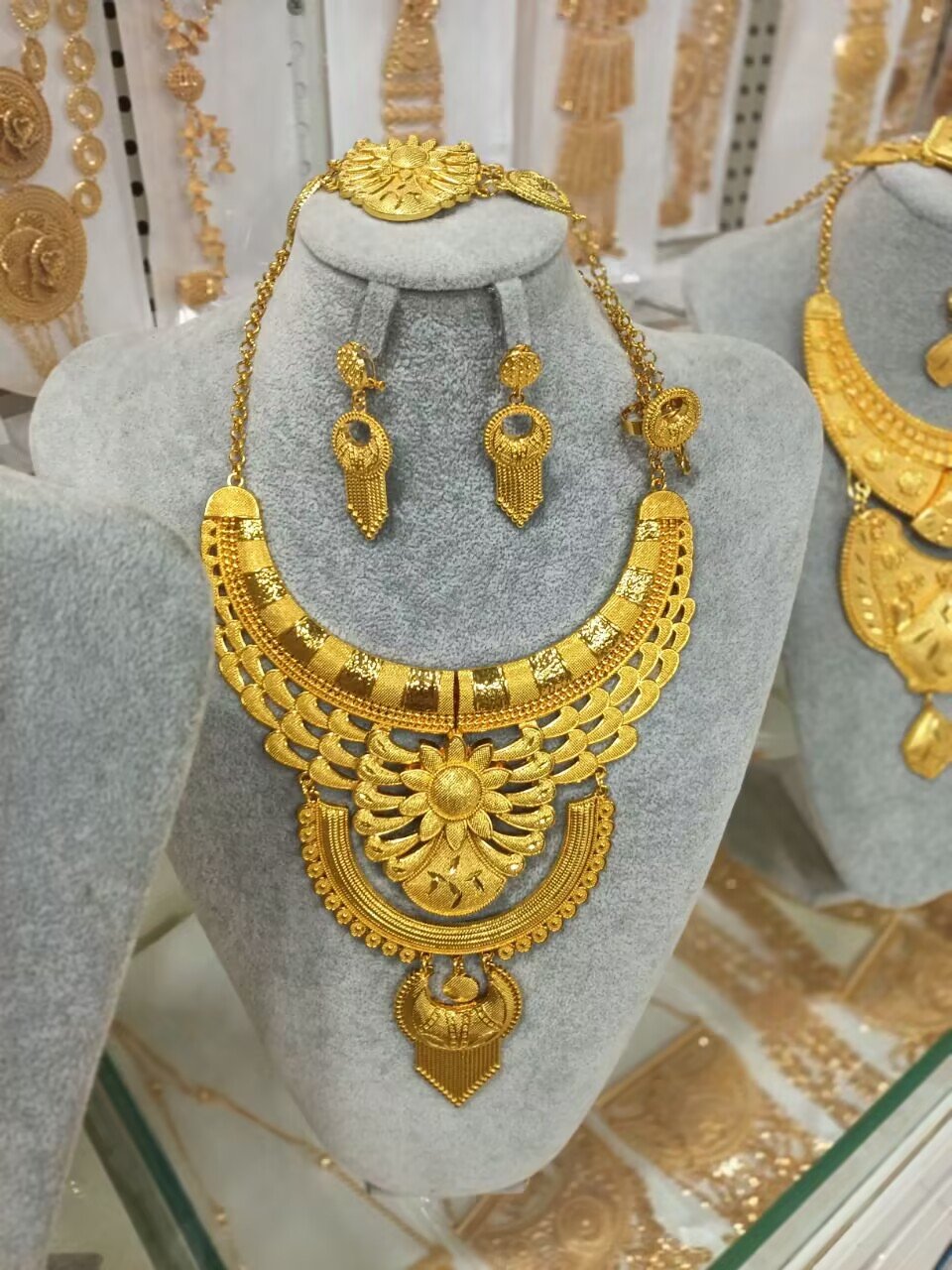
Ethiopian weddings are vibrant, community-centered events where every detail—from colorful attire to rhythmic music—tells a story of heritage and love. At the heart of these celebrations lies bridal jewelry, a tradition spanning centuries with deep cultural meaning. The Ethiopia Classic Gold Plated Jewelry Set, featuring a necklace, earrings, bracelet, and ring, is a modern iteration of this custom, blending traditional motifs with accessible craftsmanship to honor both past and present. For many Ethiopian brides, this set isn’t just an accessory; it’s a link to roots, a symbol of commitment, and a piece of family history.
### Historical Foundations of Ethiopian Bridal Jewelry
The roots of Ethiopian bridal jewelry stretch back to the Axumite Empire (1st–7th centuries CE), one of the ancient world’s most powerful civilizations. Axumite artisans mastered goldworking, creating elaborate pieces for royalty, religious leaders, and ceremonies. Gold symbolized divine favor, purity, and wealth—qualities central to bridal traditions. Over time, these practices spread beyond elites, with families passing down jewelry to preserve cultural identity and bonds. Today, gold plated sets make these traditions accessible to more couples while retaining their heritage.
### Core Components of the Classic Gold Plated Bridal Set
Each piece in the set carries unique symbolism and craftsmanship, rooted in Ethiopian culture.
#### Necklace: A Statement of Heritage
The necklace is the ensemble’s focal point, often featuring a thick, ornate chain called a *borkena*. Common motifs include the Ethiopian Orthodox cross (a central religious symbol) and geometric patterns (triangles for unity, circles for the cycle of life). Some necklaces add beads (good luck) or coins (prosperity). Bridal versions fall below the collarbone to complement the traditional *Habesha kemis* dress.
#### Earrings: Filigree and Symbolism
Ethiopian bridal earrings are known for intricate filigree—twisted metal wires woven into delicate patterns, a craft passed down for generations. Designs include *kobo* (hoops) or dangling charms like crosses or beads. Filigree reflects artisan skill and honors ancestral blessings, making the earrings more than decorative.
#### Bracelet: Wrist Adornment with Meaning
The bracelet is usually a bangle or chain adorned with charms: tiny crosses (faith), coins (financial stability), or geometric shapes (harmony). Some are engraved with the couple’s initials or wedding date, turning them into personalized keepsakes. Worn on the left wrist, it symbolizes connection to the heart and the couple’s bond.
#### Ring: The Final Touch of Commitment
Unlike Western rings (left ring finger), Ethiopian bridal rings are worn on the right. The set’s ring is a simple band with filigree or a small stone, exchanged during ceremonies to signify commitment. Engravings of traditional motifs add a unique, heritage-rich touch.
### Gold Plating: Balancing Tradition and Accessibility
Gold plating makes traditional designs affordable without losing cultural essence. Artisans coat base metals (brass/copper) with 18k or 24k gold using time-honored techniques, creating the warm golden hue of solid gold at a fraction of the cost. The plating is even and durable, ensuring the set lasts for years with proper care.
### Cultural Significance Beyond Aesthetics
The set is more than adornment—it’s a bridge between past and present.
#### Bridal Jewelry as a Symbol of Union
During Ethiopian weddings, the groom presents the set as a sign of love and commitment, displayed in rituals like *qene* (poetry recitals) or *zare* (celebratory dances). The four pieces (necklace, earrings, bracelet, ring) symbolize the four pillars of a strong marriage: love, trust, respect, and communication.
#### Generational Legacy and Family Bonds
Many families pass down jewelry, and even new gold plated sets mimic traditional designs to become part of this legacy. A bride might pair her mother’s old necklace with the new set, blending past and present. This practice preserves traditions and strengthens bonds, as each piece carries ancestors’ stories.
### Styling the Set for Modern Ethiopian Brides
The set works with both traditional and contemporary looks.
#### Pairing with Traditional Habesha Attire
The *Habesha kemis* (long, colorful embroidered dress) pairs perfectly with the set’s warm gold hue. The jewelry stands out against vibrant fabrics, and a matching headwrap adds authenticity. For outdoor weddings, the gold catches sunlight, creating a stunning effect.
#### Blending with Contemporary Wedding Looks
Modern brides often pair the set with white wedding dresses, using the jewelry to add cultural identity. The set’s classic design complements minimalist dresses, making the intricate details the focal point. Some add modern accessories (simple hairpins, small clutches) for a unique, personal touch.
### Caring for Your Gold Plated Jewelry Set
To preserve the set:
– Avoid water (chlorinated/saltwater) and chemicals (perfume, lotion, hairspray) that tarnish plating.
– Store in a dry, cool place (soft cloth or compartmentalized box) to prevent scratching.
– Clean with a soft, dry cloth; use mild soap and warm water only if necessary, then dry thoroughly.
– Avoid strenuous activities while wearing to prevent plating wear or damage.
### Conclusion
The Ethiopia Classic Gold Plated Bridal Jewelry Set is a celebration of Ethiopian culture, history, and love. By blending traditional motifs with accessible gold plating, it lets modern brides honor their heritage while creating new memories. Whether paired with a *Habesha kemis* or a white dress, the set carries ancestral blessings into the bride’s new life— a legacy that will continue to tell Ethiopian wedding stories for generations.
Reviews
There are no reviews yet.